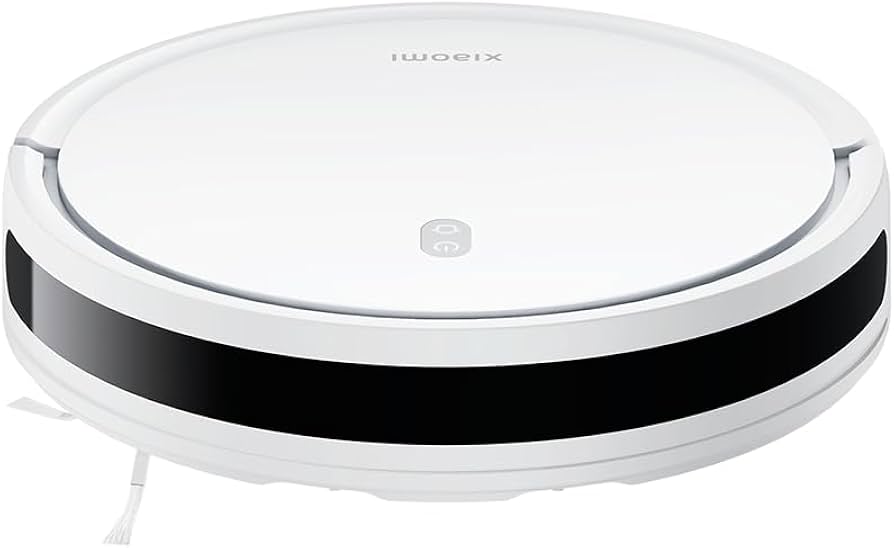
What You Need to Know Before Buying the Xiaomi Robot Vacuum E10 EU
The aim of the article is not to shame the product, but to help others pick a budget friendly vacuum cleaner… And since we are in that process and currently researching, why not sharing the knowledge?!
When I am not drinking beer or testing different pieces of software, I research regarding hardware devices.
If you’re browsing for an affordable robot vacuum, the Xiaomi Robot Vacuum E10 EU might catch your eye. It boasts a clean design, decent suction power, and smart app integration—all at a lower price point than most competitors. But before clicking “Buy”, it’s important to understand what you’re actually getting—and more importantly, what you’re not.
Here’s a detailed breakdown of the limitations, user complaints, and real-world consequences of choosing the E10, so you can decide if it’s right for your home.
No Advanced Navigation – And Why That Matters
Unlike higher-end models, the E10 doesn’t use LIDAR or cameras to map your home. Instead, it relies on basic gyroscopic sensors and a random pathing system.
What this means in practice:
- No map creation or memory: The vacuum starts from scratch each time—it never “learns” your home.
- No room-specific cleaning: You can’t tell it to clean only the kitchen or bedroom.
- No virtual no-go zones: You can’t draw off-limits areas in the app. If you have pet bowls, play areas, or stairs, you’ll need to manually block them.
- Inefficient pathing: It may clean the same area multiple times while skipping others, especially in more complex layouts.
This robot works best in simple, open rooms. If your home has many obstacles, multiple rooms, or you want precision control, the E10 will likely fall short.
Slower, Less Efficient Cleaning
Because the robot doesn’t follow a smart path, cleaning takes longer and can feel random or inconsistent. Users report that it may take twice as long as models with smart mapping to clean the same area. It can miss spots, especially along edges or corners, and you’ll often need to run it more frequently to maintain cleanliness.
Small Dust Bin – Frequent Emptying Required
The E10 has a relatively small dustbin, which fills up quickly. This is particularly inconvenient if you have pets that shed, your floors collect a lot of dust or crumbs, or you want to “set it and forget it.” Frequent emptying reduces the hands-off convenience that robot vacuums are known for.
Limited Battery and Long Charging
The battery lasts around 110 minutes in standard mode, but in Turbo mode, runtime drops noticeably. It also takes several hours to recharge, which slows down cleaning if your home is larger or the job is interrupted. Since there’s no memory of previous cleaning, the robot restarts the job from the beginning once fully charged.
Basic App Control – No Smart Features
You can control the E10 via Xiaomi’s Mi Home app, but functionality is limited:
- No room-by-room cleaning or room naming
- No map view
- No zone cleaning or virtual walls
- Scheduling is possible, but without any intelligent targeting
This makes it far less customizable than competitors in the same price range, such as the entry-level Roborock models.
Poor Carpet Performance
Another common complaint: the E10 doesn’t handle thick or high-pile carpets well. It may miss debris stuck in carpet fibers, sometimes gets stuck on transitions or rugs, and generally performs much better on tile, wood, or laminate flooring. If your home is carpet-heavy, especially with medium to high-pile rugs, this vacuum won’t give you satisfying results.
Who Should (and Shouldn’t) Buy This
Buy it if:
- You live in a small or studio apartment
- You don’t mind occasional manual supervision
- You want a budget robot for light, daily cleaning of hard floors
Avoid it if:
- You have a large home, carpets, or pets
- You want precision cleaning, mapping, or no-go zones
- You’re expecting full automation and smart home integration
Final Verdict
The Xiaomi Robot Vacuum E10 EU is a solid budget vacuum with real limitations. It can help keep a basic space clean—but it’s not a “set-it-and-forget-it” solution for everyone.
Know what you’re sacrificing in terms of intelligence, efficiency, and control—and if those trade-offs work for you, it might still be a worthwhile investment.
For me the main problems are the fact that it vacuums randomly and that the battery does not last too long, as I live in a big house.